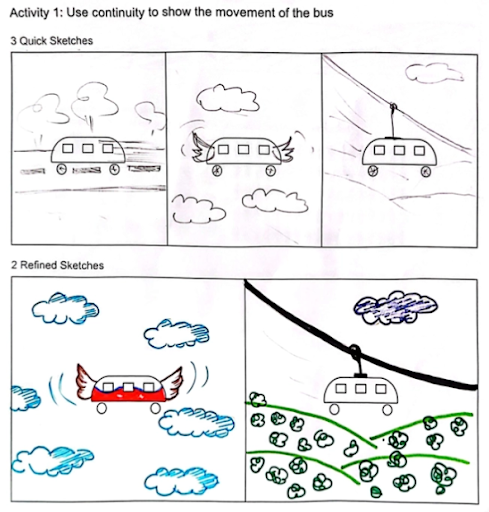
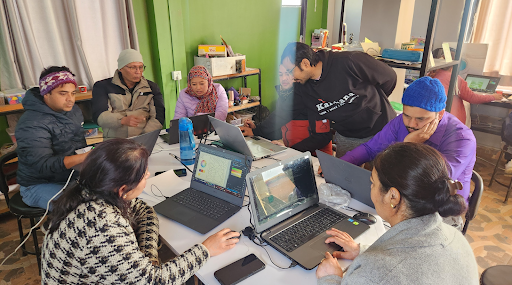
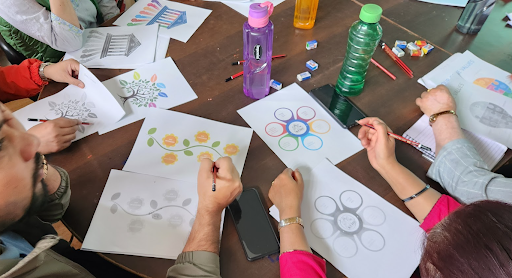
Figure A10: Teachers exploring visual design principles through hand-drawn as well as digital worksheets, actively practicing and developing new digital skills.
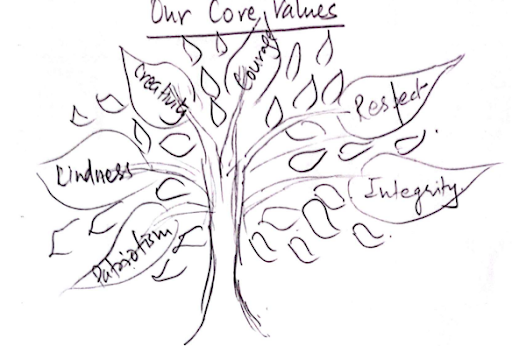
2. Visualize school values: Teachers first created quick hand-drawn sketches to generate many ideas during the divergent phase and selected one during the convergent phase. They then transformed these sketches into digital artwork using Inkscape, a vector graphics editor. In a design critique session, we printed and distributed the latest versions of the designs for peer review. During the first 10 minutes, teachers silently rotated through each design as they spent two minutes per design to answer first-impression prompts such as: Which part of the design grabs your attention? What is most memorable? In the next 10 minutes, the focus shifted to design questions like: How do you feel about the color choices? Will it resonate with the intended audience? What elements would you add, remove, or clarify? After this structured review, teachers shared their feedback aloud while the design teams noted input for refinement. This turnwise, collaborative process not only refined individual designs but also strengthened teachers’ collective capacity to notice salient design elements, critique constructively, and iterate thoughtfully.
Figure A11: A teacher’s hand-drawn value tree sketch accompanied by peer feedback, illustrating iterative design and collaborative refinement.
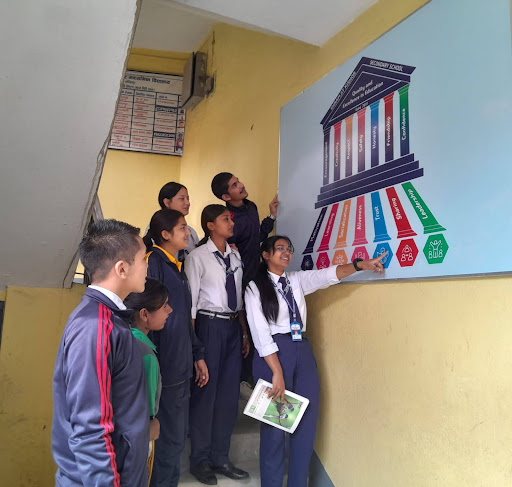
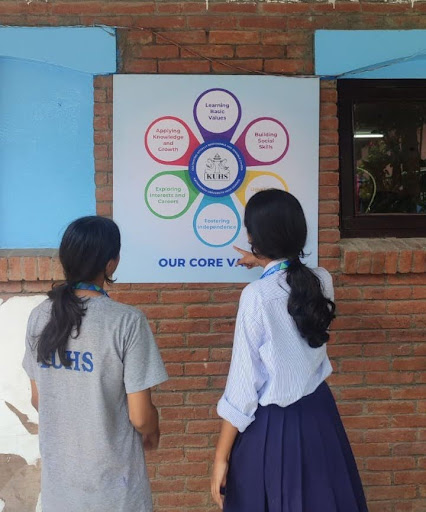
3. Co-design with designer: The teachers collaborated with an artist to finalize their designs. As many teachers struggled with Inkscape in refining their designs, they connected virtually with the artist who made the necessary changes to the designs. 4. Install and Celebrate: Finally, the polished designs were printed, framed, and installed at selected sites, allowing students and teachers to engage with the visual representations and spark discussions around school values. To celebrate the teachers’ efforts, we organized a closing ceremony where the teachers presented their design journey along with their final designs with an audience that comprised teachers from other schools, representatives from the department of education, and educators from non-governmental organizations.
Figure A12: Students observing the installed value designs and engaging in discussion, reflecting on the meanings
Key Insights
1. From abstract values to tangible representations: Phase V revealed the power of making school values visible. What initially existed as words in documents, often unnoticed, became tangible, shared artifacts through collective reflection and design. Teachers revisited institutional histories, rediscovered foundational values, and reimagined how these could be represented meaningfully within school spaces. This process transformed values from abstract statements into lived, visible commitments. 2. Design as professional growth: For many teachers, concepts such as continuity, balance, closure, and color theory were entirely new. Although learning tools like Inkscape were initially challenging, the sessions expanded teachers’ understanding of design aesthetics and digital literacy. Even those with no prior design experience reported a shift in perspective, seeing visual representation not as decoration, but as a powerful communication tool. The integration of art, culture, pedagogy, and technology enriched their professional identities and rekindled enthusiasm for teaching. 3. Iteration through collaboration: Translating complex ideas into digital formats proved difficult for many participants. Partnering with a visual artist/designer created an important bridge, enabling teachers to refine their concepts through multiple iterations. This collaboration modeled the very principles the project promoted: feedback, revision, and co-creation, demonstrating that meaningful design is an iterative and collective process. 4. Inclusivity across disciplines: The sessions were accessible to teachers of all subjects. Participants emphasized that the learning extended beyond art or design; it strengthened reflective thinking, enhanced presentation skills, and offered new ways to integrate aesthetics and values into classroom practice.