A core principle of our work was treating curriculum design as an iterative, collaborative process. Instead of finalizing lessons in isolation, we continuously refined activities based on teacher feedback, classroom observations, and student responses. Teachers became co-designers as they were involved in testing prototypes, adapting lessons to their local contexts, and sharing insights that shaped subsequent versions. This cycle of testing, reflecting, and improving ensured that the lessons and activities remained practical, culturally relevant, and meaningful to students.
Theory
Inviting teachers to draw, share their drawings, or write reflections on their drawings, as these artifacts provide an excellent forum for critical reflection, which we know is essential to professional practice (Weber & Mitchell, 1996). When such reflective artifacts are embedded within iterative cycles of testing and refinement, they enable educators to make their pedagogical thinking visible, question underlying beliefs, and refine curriculum and instruction in context-responsive ways.
Examples
We conducted classroom observations to see how teachers were using our resources with their students. After each observation, we provided feedback using the “What Went Well” (WWW) and “Even Better If” (EBI) structure, helping teachers recognize strengths and areas for improvement. For example, during one observation, we noted that Tilak asked insightful questions and structured student reflections effectively (e.g., “What did you learn? What did you struggle with? Anything interesting to share?”). We also suggested improvements, such as using a randomizer – popsicle sticks with student names, to engage all students and assigning students responsibilities for distributing and collecting materials to increase attentiveness and reduce preparation time. In a subsequent observation, Tilak implemented those suggestions, assigning a student to hand-out materials, which not only saved time but also fostered a sense of responsibility among the students.
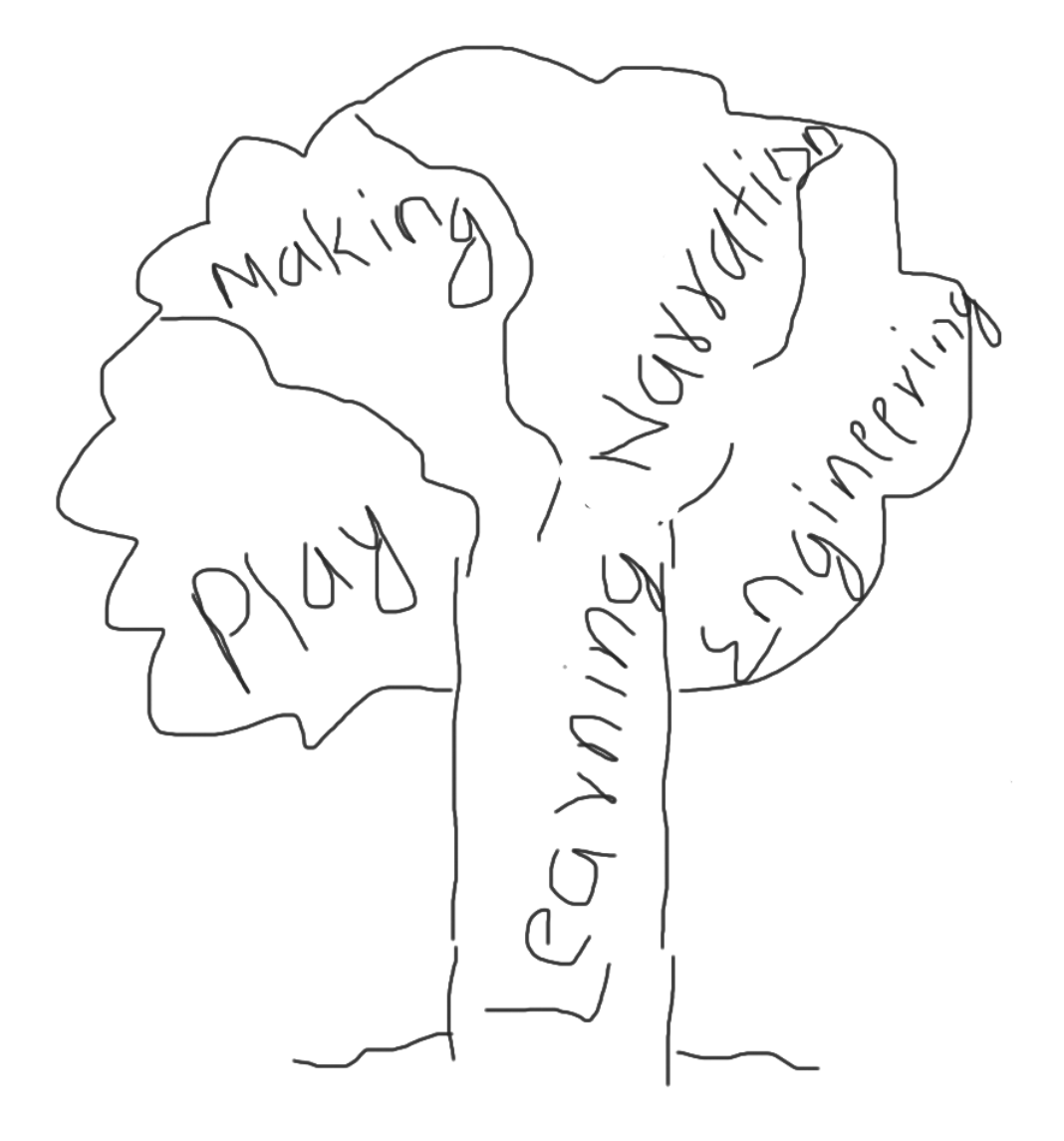
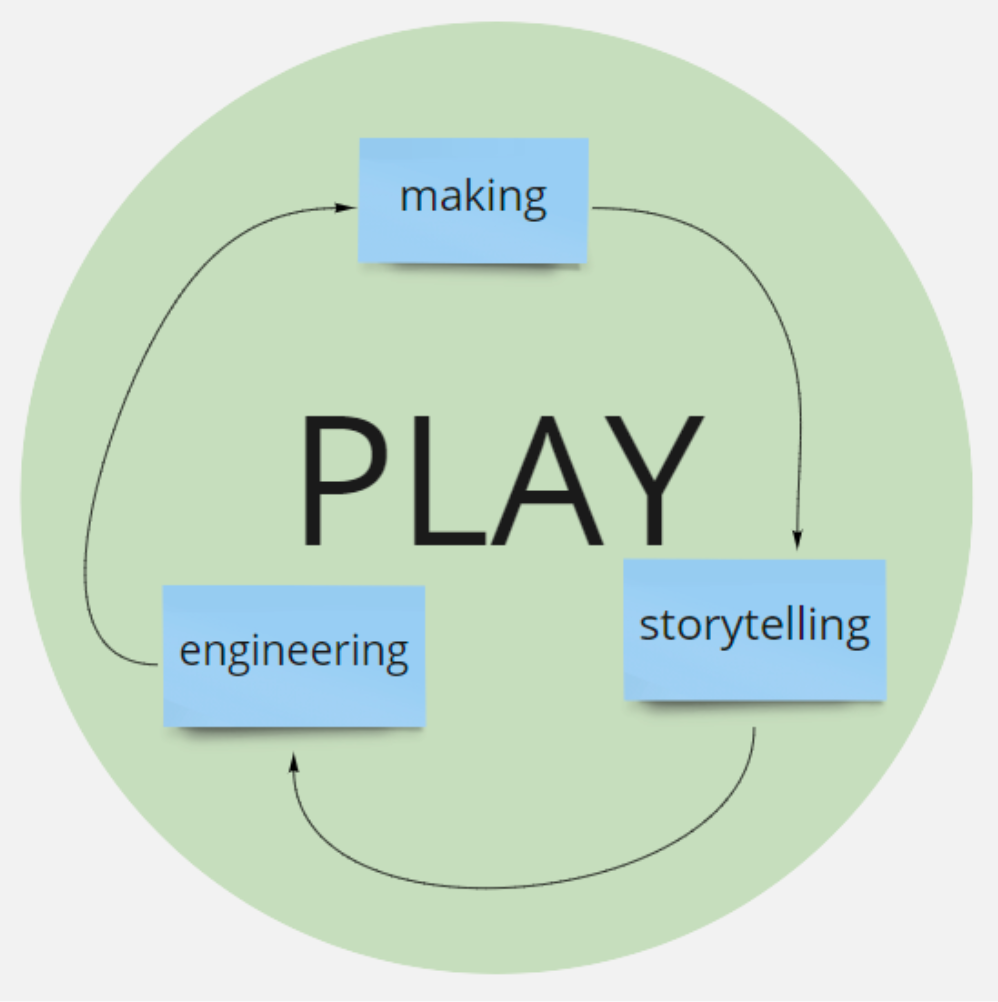
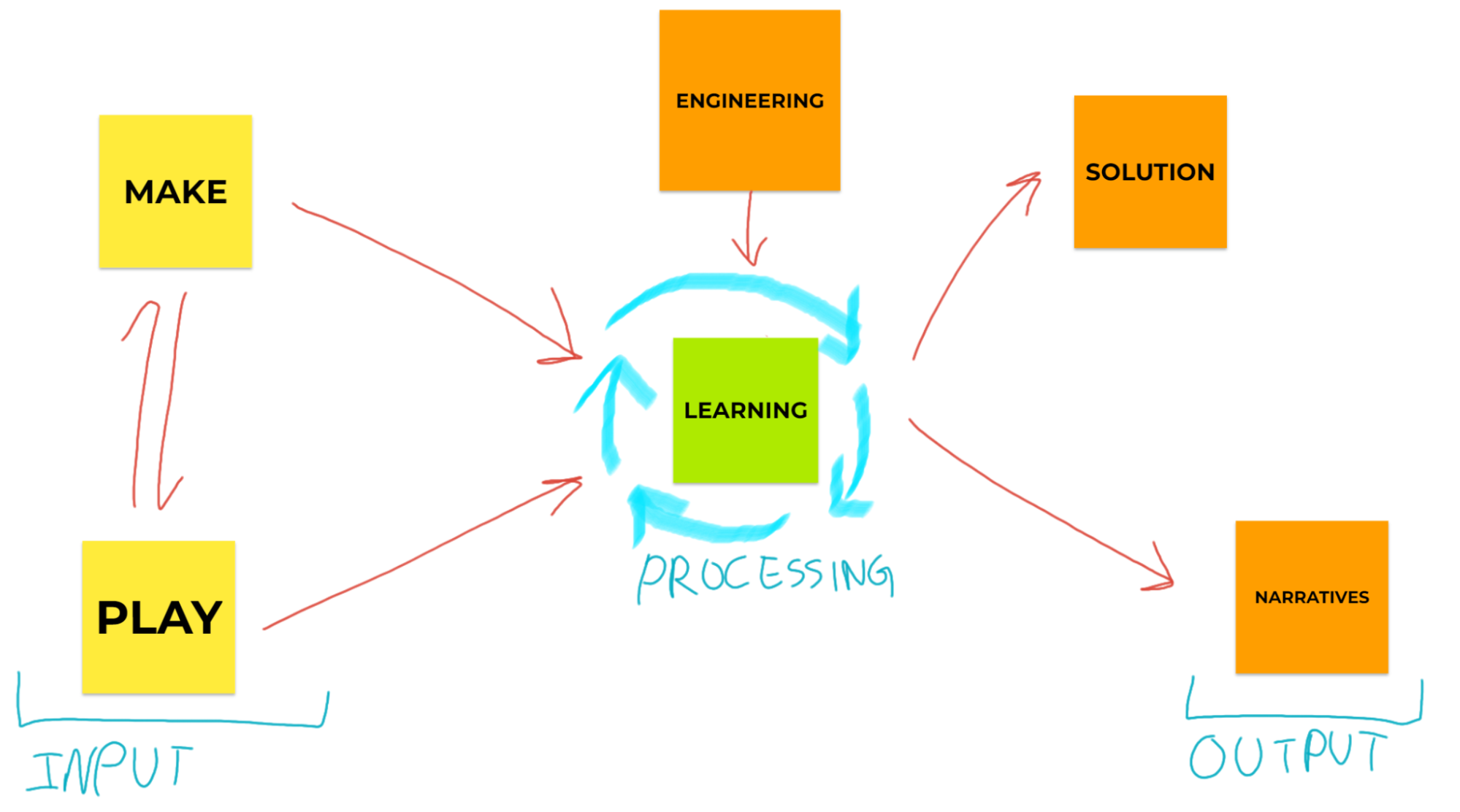
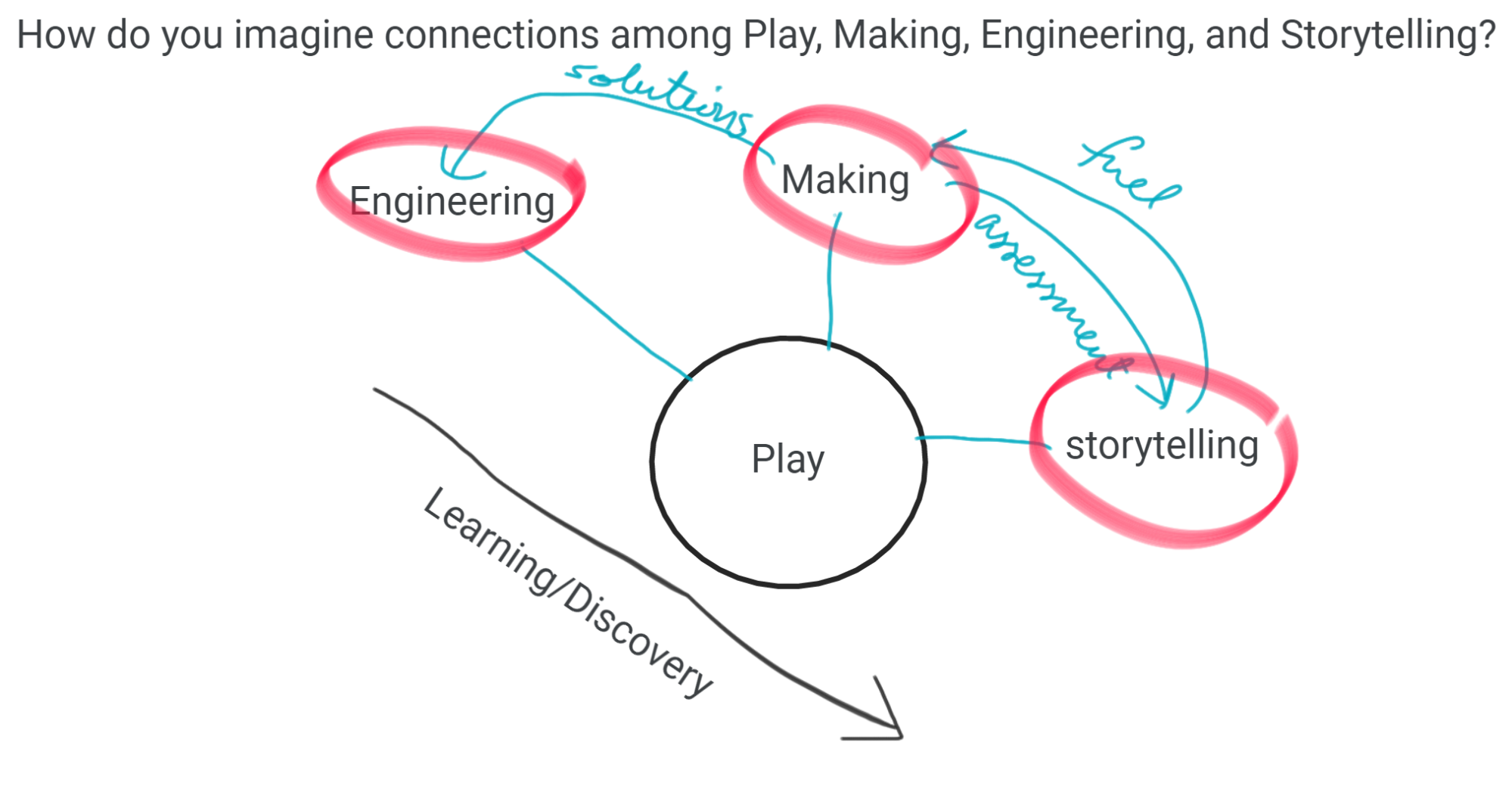
When teachers were asked to draw connections among play, making, storytelling, engineering, and learning, they used a variety of approaches (Figure 27). One teacher represented learning as a tree trunk with the other four elements as branches, while Anu compared the learning process to a Central Processing Unit, with play and making as inputs and narratives as output. Other teachers developed their own unique representations. The drawings also revealed shifts in teachers’ thinking over time. In his second representation, Rupesh added arrows to highlight relationships and possible connections among the components, indicating a more relational understanding of how play, making, storytelling, and engineering are interconnected. His use of arrows might have been influenced by observing colleagues’ representations during teacher community discussions, demonstrating the iterative nature of evolving pedagogies shaped by collaboration, observation, and exchange of ideas.
Figure 27: Teachers’ representations
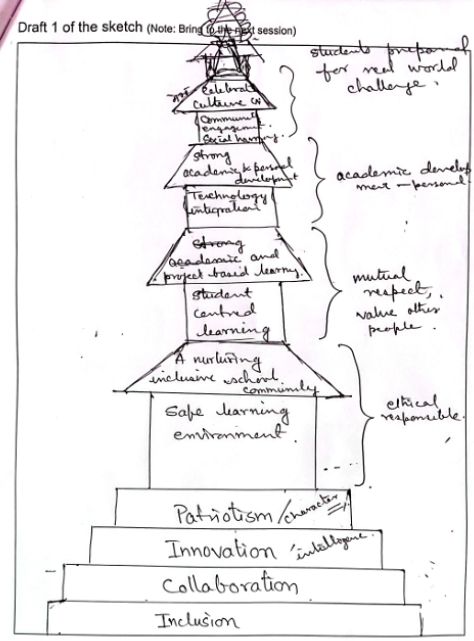
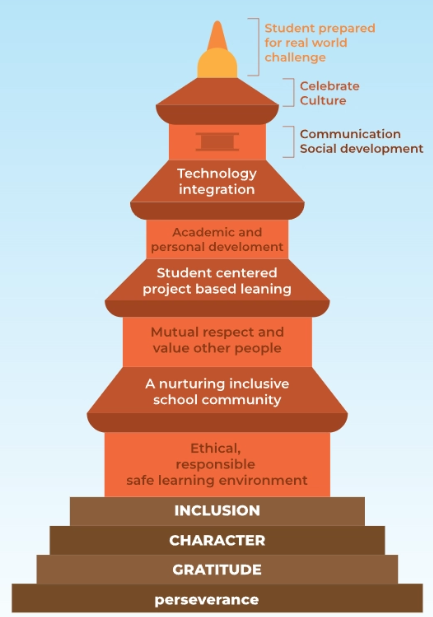
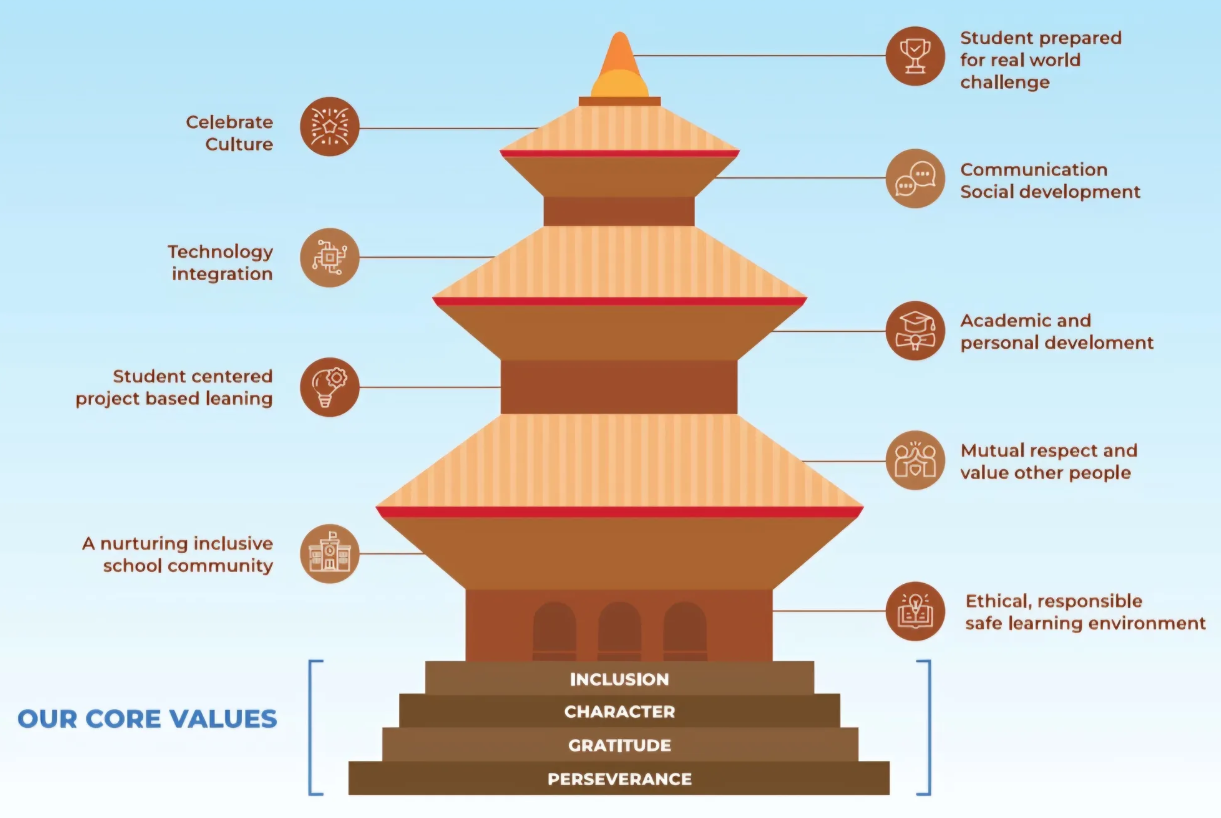
Teachers focused on revisiting and refining their representations to better reflect their evolving pedagogies and connections to school values (Figure 28). This iterative process helped teachers make their values and teaching practices more explicit and thoughtfully interconnected.
Figure 28: Rupa’s iteration of her school’s core values
Implications
By engaging in continuous cycles of adaptation and reflection, educators are better equipped to respond to diverse student needs, integrate new pedagogical approaches, and sustain improvements in practice over time. Collaborative, iterative engagement can bridge the gap between professional design expertise and classroom realities.