Phase II: Playful Engineering-Based Learning (PEBL)
Introduction (November 2021 – March 2023)
PEBL aimed to enable children to experience learning through play in their classrooms every day, with a particular focus on ensuring equity in schools with limited resources. To achieve this, we worked closely with teachers to strengthen their capacity to facilitate hands-on, playful learning. We supported teachers through three interconnected approaches. First, we developed learning kits with 12 curriculum-aligned, hands-on activities for students aged 10 to 14, complemented by digital resources such as videos, blogs, and guides. Second, we conducted professional development workshops for 46 teachers to build their facilitation skills. Third, we fostered a Community of Practice where educators shared experiences, discussed learning strategies, and participated in collaborative reflections.
Learning Community
1. Early Adopters: We identified 6 early adopters who were participants in Phase I of the study to pilot selected activities in 5 schools. The schools were deliberately selected to ensure that testing could happen in diverse learning environments.
2. PEBL Implementers: We received a total of 66 applications from 36 schools, out of which we selected 46 teachers from 24 schools after conducting interviews with school leaders. The group included 11 teachers from public schools and 13 teachers from private schools.
Stages
1. Prototype and Prepare: Sameer, a participant in Phase I, led the efforts to develop the toolkit by adapting existing Karkhana activities. These activities were redesigned to intentionally integrate the five characteristics of learning through play (LtP): joyful, actively engaging, iterative, socially interactive, and meaningful. Team members completed an online LtP course offered by the Australian Council for Educational Research (ACER) which helped them collectively make sense of the new framework.
2. Pilot with early adopters: The early adopters tested the activities we had designed with their students and shared their experiences and gave us feedback on the changes needed to be made to the activities.
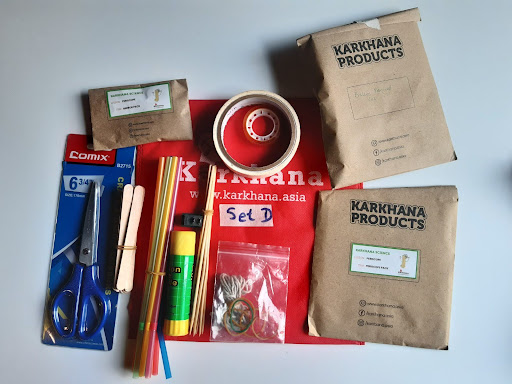
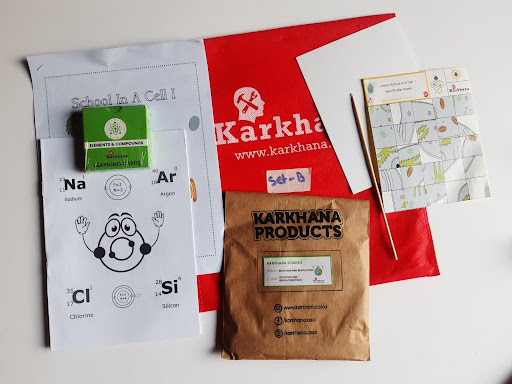
Figure A3: Beta-version of the PEBL learning kits
3. Learn and Transform: The teachers participated in 12 sessions (6 in-person and 6 virtual) which were organized around three interconnected themes. Theme 1, Understanding PEBL, introduced teachers to core ideas of playful learning through critical readings, hands-on activities, and collaborative ideation. Teachers explored how the five characteristics of play could be integrated into classroom practice, while engaging with research papers through critical discussion. This theme also included experiences with Novel Engineering – as an integrated approach to literacy and engineering, and design thinking as an approach to address classroom challenges. Theme 2, Making Learning Visible, focused on deepening cognition by externalizing thinking through documentation and reflection. Teachers worked with tools to capture and share classroom stories, used Project Zero’s thinking routines to document student learning, and explored feedback approaches to support a culture of constructive feedback within students. Theme 3, Implementing PEBL, centered on practice, with teacher participants designing and delivering PEBL experiences in their own classrooms using the PEBL toolkit.
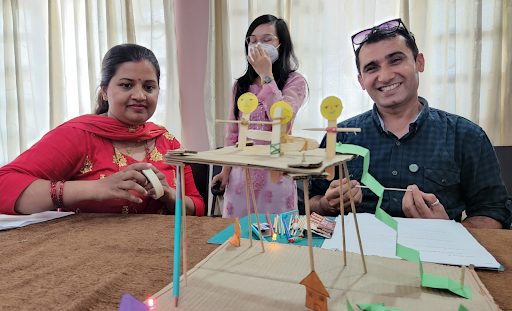
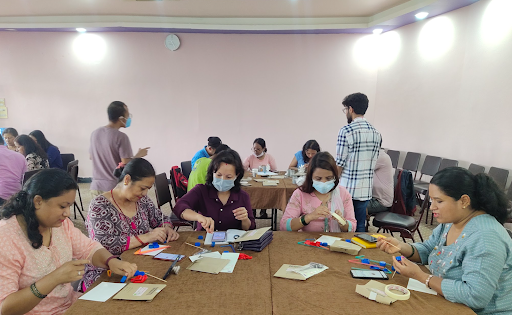
Figure A4: Teachers attending PEBL sessions
4. Practice and Share: After the completion of the 12 sessions, the teachers then facilitated lessons for their own students using the PEBL toolkit. They utilized the support of the educator guide, videos, learning kits, and activity sheets to build a world of play in their classrooms. In addition to that, the teachers also were asked to capture stories in their classrooms by taking pictures and videos of students during the activities and they would reflect on their teaching experience and share it with the rest of the teaching community. Moreover, Karkhana team members went to 6 schools to observe the teachers implement the PEBL lessons in their classrooms. After each observation, our team members provided feedback to the teachers using the What Went Well (WWW)/Even Better If (EBI) framework, to identify things that the teachers were doing well as well as opportunities for improvement.
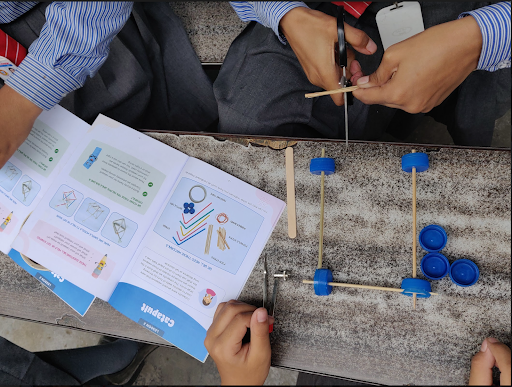
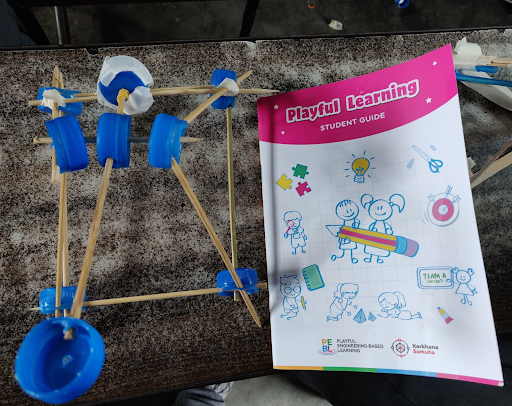
Figure A5: Students using student guide and materials from the toolkit to make a catapult
Key Insights
1. Localized Resources: Translating the student guide into Nepali improved accessibility for public school students, highlighting the importance of language and context in resource design. (Refer to Appendix C for links to the resources).
2. Supporting Iteration and Solution Diversity: Lessons were revised to allow multiple approaches and iterative work, reinforcing the role of experimentation in learning through play.
3. Time-Efficient Teacher Support: Short videos offered a practical alternative to lengthy educators’ guides, helping teachers quickly understand facilitation strategies and anticipate classroom challenges.
4. Practical Adjustments from Class Observations: Classroom observations informed refinements, such as suggesting the use of a randomizer for student participation and assigning students to distribute materials, improving engagement and management. In Phase III, a dedicated session on classroom management was added to support teachers in handling materials and managing the messiness of hands-on activities.