Pathways for Expressing and Sharing Through Making
Explanation
Providing ample opportunities for teachers to communicate their ideas, experiences, and stories of making, tinkering, designing, and engineering through tangible artifacts.
Theory
In making, as participants produce “fabricated objects that are multidimensional and require multiple modes to convey all the elements of a project” (Lui et al., 2019), making can become a language for expression allowing participants to externalize thoughts, emotions, and imagination in visible, shareable forms.
Examples
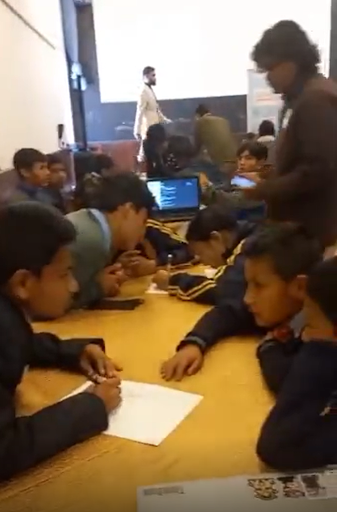
In the session Capturing and Sharing Stories from Classrooms, teachers were introduced to video-making using CapCut. Tilak created short videos showcasing his students engaged in hands-on activities, integrating a storyline, background music, and video edits such as trimming, cutting, and joining clips. Through this process, he effectively documented and shared both teachers’ and students’ learning journeys, making their experiences visible and engaging for a wider audience (Figure 21).
Figure 21: Frames from Tilak’s short video
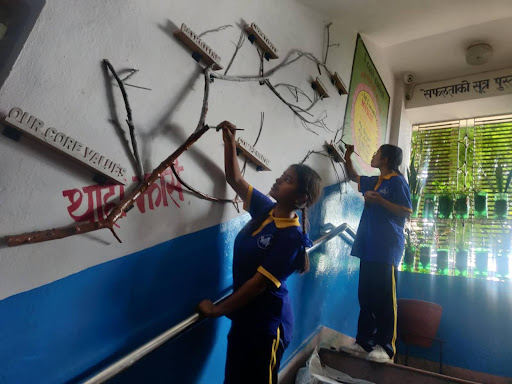
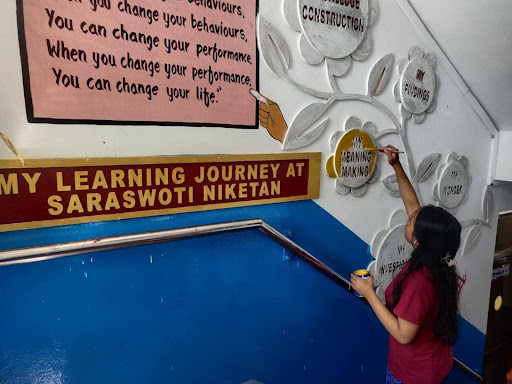
After finalizing the digital design of the school’s core values, Rabina and Anita envisioned bringing it into physical form, creating a tangible, interactive installation. Rabina proposed using a real tree branch from her garden as the base, grounding the design both literally and symbolically. Once the branch was secured on the wall, she engaged her Grade 9 students in selecting colors and adding decorative elements, turning the installation into a collaborative creation (Figure 22). This multidimensional approach not only transformed the abstract values into a visible, shared artifact but also provided a meaningful way for students and teachers to express, engage and interact with the school’s guiding principles.
Providing educators with opportunities to represent ideas through tangible artifacts makes thinking visible and transferable, allowing both teachers and peers to engage with and learn from each other’s work. These expressive pathways foster personal connection, ownership, and agency, enabling teachers to take pride in their learning while supporting deeper understanding and meaningful integration of new pedagogical ideas.