
Phase IV: Co-designing Making Spaces with Mavericks
Introduction (June 2023 – July 2024)
Phase IV focused on increasing access to open-source resources that promote STEAM education through Making Spaces in Nepali schools. This allowed us to continue working with participants from previous phases. We worked with 3 public and 2 non-profit schools in Kathmandu, Kavre and Lalitpur throughout the year to support them in creating a making space and co-designing engagement programs for students. The local government and the schools co-funded the setup of these spaces.
Learning Community
We worked with 4 schools which we already had good relations with and one more public school was added by the recommendation of the Lalitpur local government. The co-design process began in collaboration with 2 teachers and 1 school leader from each school. There were 15 participants in total, out of which 8 were mavericks, defined as educators who went beyond scheduled sessions, stayed actively engaged with the teaching community, and invested significant time and effort in bringing playful learning experiences to their students..
Stages
1. Co-design the space: During the first two-quarters of the project, we focused on building the spaces. This included identifying available spaces in these schools, determining themes the schools wanted to focus on, designing 3D models of these spaces, and conducting teacher development sessions. These efforts helped the schools understand how to run a making space, figuring out values that helped envision the making space, how to find resources for teachers and students, and ways to conduct both curricular and after-school programs in these spaces.
2. Equip and Prepare: Finding dedicated spaces in public schools was challenging. At Panchakanya School, the only option was a storage room with water tanks, while at Saraswoti Niketan and Shramjit School, we shared space with the library. At Saraswoti Niketan, we organized the cluttered library by designating one wall for books and another for making materials, with the center serving both purposes. Construction was completed within two months during vacations and off days, after which teachers finalized the space by lending hands in painting walls, arranging tables, and setting up activity stations.
3. Bring the space to life: After-school programs activated the making spaces, with schools like Saraswoti Niketan integrating Novel Engineering sessions into weekly activities and initiatives like Book-Free Fridays. At Niten Memorial, the school created a new role of Making Space Lead, for one of our teacher participants, which proved critical for structuring and sustaining the program as he structured grade-specific hands-on activities and trained senior students to support facilitation, ensuring continuity and student leadership. Peer visits across schools inspired new ways to display student work and share strategies, reinforcing engagement and playful learning while fostering collaboration among teachers.
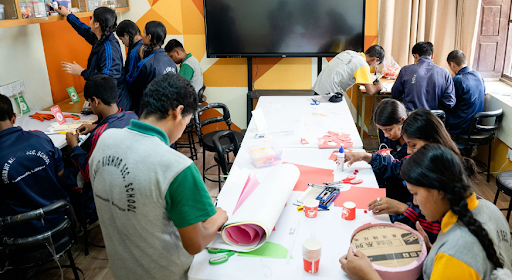
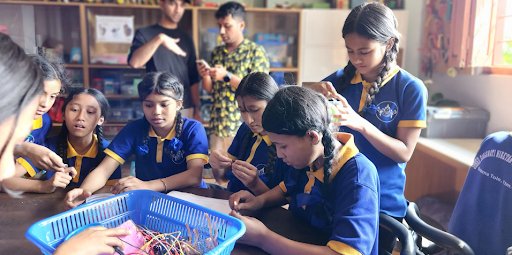
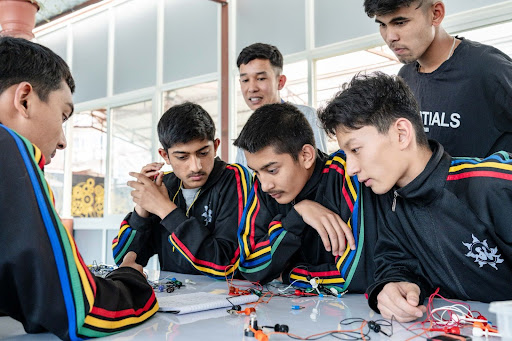
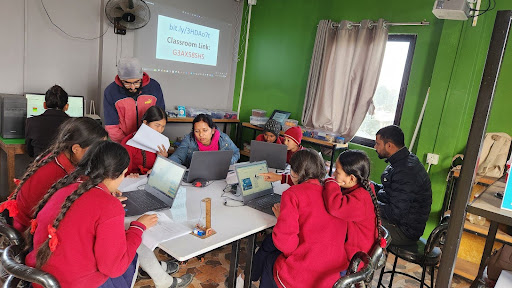
Figure A7: Students and teachers collaborating to bring the making spaces to life, creating a vibrant environment for hands-on, playful learning.
4. Document and Disseminate: We created a making space toolkit with the objective of helping schools and organizations create their own making spaces (Refer to Appendix C for links to the resources).
Key Insights
1. Teachers rediscover the joy of making: Co-designing the making spaces allowed teachers to step out of their traditional instructional roles and re-engage as learners. This shift from delivering content to experimenting and exploring, revealed how making can rekindle curiosity and professional growth among teachers themselves.
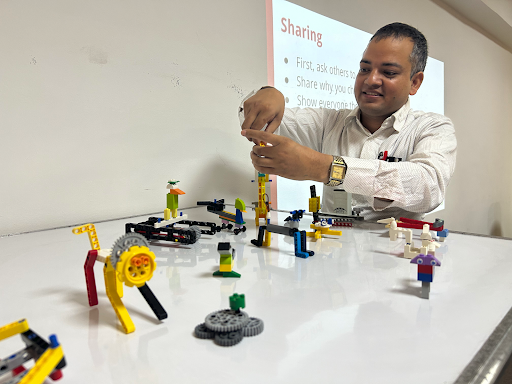
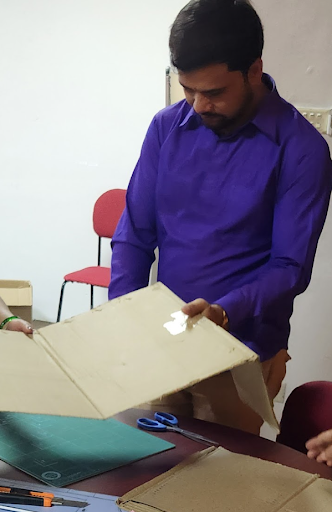
Figure A8: Teachers enjoying being learners.
2. Shifting teacher-student roles: Moments emerged where teachers positioned themselves as learners. For example, Saradha sought help from her student to debug code and invited the student to modify it on her computer. Running the simulation together, they shared the success of producing the desired result. Such instances demonstrated how making spaces can flatten hierarchies and foster reciprocal learning relationships.
3. Persistent hierarchies across grades: Cross-grade interactions revealed entrenched hierarchies. Older students often positioned younger peers as assistants rather than collaborators, limiting opportunities for mutual learning. These dynamics underscored the need to intentionally structure collaboration to promote equity and shared agency.
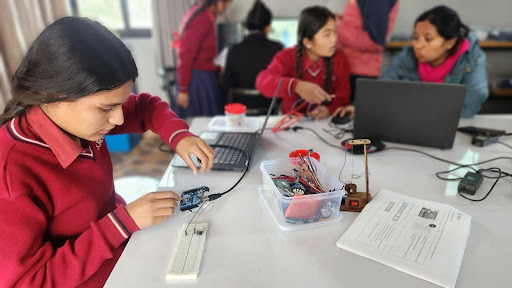
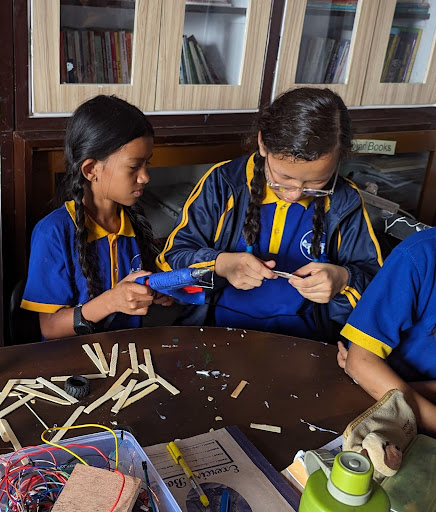
Figure A9: Contrasting moments in the making space: teachers learning alongside students in collaborative work, and cross-grade interactions where hierarchies persist.
4. The importance of acknowledgment: Student motivation was visibly affected when successful work went unrecognized. Brief or distracted responses from teachers dampened excitement, pointing to the critical role of timely acknowledgment in sustaining engagement within playful, hands-on environments.
5. Balancing structure and autonomy: Teachers sometimes redirected students to strictly follow guided activities, even when students were creatively extending their work. While structure provides clarity, overemphasis on completion can inadvertently suppress exploration. Co-designing making spaces requires balancing curricular goals with room for student-driven innovation.
6. Foundational skill gaps: Basic digital literacy barriers such as unfamiliarity with browsers or difficulty in locating keys in a keyboard, surfaced unexpectedly. These challenges revealed the importance of scaffolding foundational skills when introducing technology-based making activities.