
Flexible Designs for Ready-to-adapt Lessons
Explanation
Providing a strong foundational structure while giving teachers the flexibility to adjust activities based on their classroom realities. Instead of rigid structures, the shared lessons and activities offered adaptable pathways that teachers could modify according to student needs, available materials, time constraints, and local contexts.
Theory
Asking teachers to design curriculum was unproductive because teachers often lacked necessary expertise to design materials and were not able to distinguish the most valuable uses for the technology. In addition to that, teachers also lacked preparation time. On the contrary, asking teachers to customize an existing curriculum designed by professional designers allowed teachers to focus their efforts on distinguishing effective pedagogical practices to address their students’ particular learning needs (Gerard et al., 2011).
Examples
Teachers were introduced to drawing activities such as “How it Works” diagrams, where they illustrated the inner mechanisms of everyday objects. The activity proved highly engaging and generative, encouraging teachers to uncover the often-invisible complexity of familiar items. Several teachers later replicated the activity with their students, providing objects like staplers, punching machines, scissors, ballpoint pens, and water sprays for observation as they created the diagrams. Some also connected the exercise to science lessons on simple machines, integrating it directly into the curriculum.
Similarly, Tilak adapted the LED art lesson to test whether structured iteration would deepen student learning (Figure 30). Rather than conducting the activity as a one-time task, he redesigned it into four rounds, allowing students to revise and improve their work with each draft. He introduced small adjustments across rounds, such as advancing selected students and encouraging redesign to sustain motivation and increase challenge. Contrary to concerns that repetition might reduce interest, students’ creativity and engagement grew with each iteration. Through this flexible adaptation of the lesson, Tilak recognized that designing space for revision and “safe failure” fostered deeper learning and ownership.

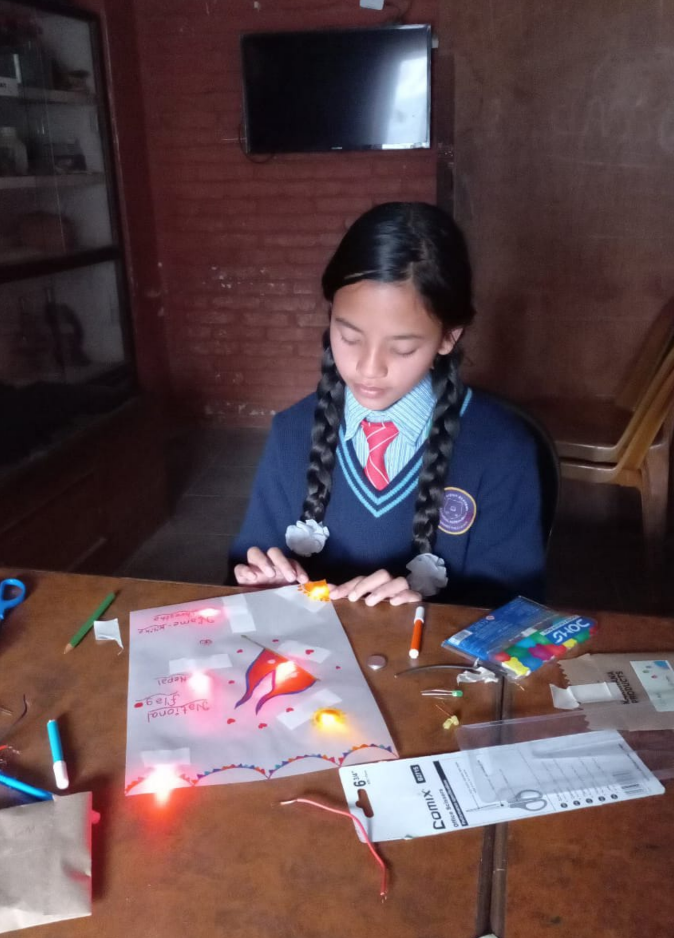
Figure 30: Photos of Tilak’s students showcasing their work
In line with adapting to local contexts, in Phase III, a Novel Engineering activity led to a rich discussion on the use of materials. The standard list we share includes popsicle sticks, rubber bands, toilet paper rolls, construction paper, wooden skewers, paper cups, and duct tape. These materials proved difficult to source in remote villages and raised concerns about replenishing supplies after projects were completed. When we introduced an art educator’s idea of viewing materials through a different lens to include natural and locally available resources like leaves and branches, the teachers expanded the list with their own suggestions to include alternatives such as basket-weaving straw, bamboo, cane, clay, and sand.
Implications
Providing teachers with a well-structured yet flexible curriculum empowers them to adapt lessons to their classroom realities, balancing guidance with autonomy. Rather than requiring teachers to design materials from scratch, which can be time-consuming, allowing them to customize professionally designed activities enables focused, context-responsive decision-making.